
تماس فوری
Production of customized wire elements for industrial equipment
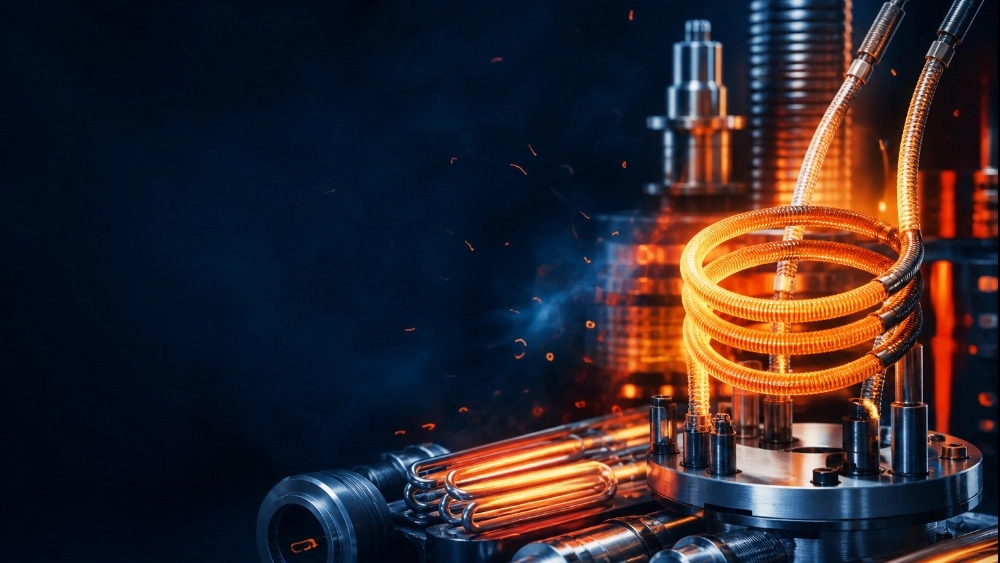
Element construction with wire is one of the practical methods for producing heating equipment in various industries. Wire elements are made using special resistance wires and can be produced in different power, voltage, length, diameter and shapes.
Using technical experience and specialized equipment, Celsius Industrial Group produces all kinds of elements with wire for use in industrial furnaces, packaging machines, food industry equipment, dryers, industrial heaters and other thermal systems.
In the design and manufacturing process, factors such as working temperature, required power, installation space, device type, duration of operation and environmental conditions are checked so that the final element has a proper performance and useful life.
What is wire element?
The wire element is a type of thermal element that is made of a resistance wire with a specific diameter and alloy. When the electric current passes through this wire, the electrical resistance of the wire causes the production of heat.
The wires used in the construction of the element are usually selected from heat and oxidation resistant alloys such as nichrome or iron, chrome and aluminum alloys. Choosing the right alloy depends on the working temperature, type of application and environmental conditions.
- Spring element
- Spiral element
- Ring element
- U-shaped element
- Flat element
- Element for furnace
- Element mounted on a ceramic base
- Coated wire element
- Element formed according to the customer's drawing
The advantages of making elements with wire
The use of wire in the production of elements creates a lot of flexibility in design and construction. This type of element is suitable for projects that require specific dimensions or form.
Customizability
The wire element can be designed and produced based on the shape of the chamber, the installation space, the power of the device and the required temperature. For this reason, this product is a suitable option for special and industrial equipment.
Ability to adjust thermal power
By changing the type, diameter and length of the resistance wire, it is possible to control the resistance and power of the element. This helps the element to be in harmony with the electrical and thermal requirements of the device.
Fast heating
Due to its proper structure and volume, wire heats up quickly in many applications and transfers heat to the environment.
Wide application
The wire element is used in various industries, such as packaging, plastic, food, laboratory, steel, furnace making and production of thermal equipment.
Easy repair and replacement
In many devices, the wire element is installed in a way that makes it easier to check, replace or repair it.
Applications of elements made with wire
Industrial furnaces
Industrial and laboratory furnaces need resistant and stable elements to create high temperatures. The wire element can be made with suitable form and power for the inner chamber of the furnace.
In this application, the choice of wire alloy, distance between rings, installation method and insulation are very important.
Packaging machines
In plastic sewing, shrinking and thermal packaging machines, the element must be heated in a short period of time and create uniform heat. Making the element with wire provides the possibility of producing a piece that fits the length and shape of the device's jaw.
Plastic injection machines
In plastic injection machines, elements are used to heat the mold, nozzle, cylinder and different parts of the machine. These elements must be resistant to continuous temperature changes and successive switching on and off.
Food industry equipment
Types of industrial ovens, greenhouses, dryers, cooking devices and food processing equipment need reliable heating systems. The wire element can be suitable for this equipment if the alloy and insulation are chosen correctly.
Industrial heaters
In industrial heaters and hot air production devices, a wire element is placed in the air path and causes an increase in the temperature of the air flow. The proper shaping of the wire, the distance between the rings and the correct air circulation are particularly important in this application.
Laboratory equipment
Oven, laboratory heater, incubator and research equipment need elements with precise power and uniform heating. Celsius Industrial Group can design the required elements of this equipment based on technical specifications.
Choosing the right alloy for wire
The type of resistance wire has a direct effect on the performance and lifespan of the element. To choose the right alloy, the working temperature, type of environment, humidity level, contact with chemicals and the number of times the device is turned on and off should be checked.
For applications that require higher temperatures, more resistant alloys such as iron, chromium and aluminum alloys can be used. Of course, the final choice should be made based on the actual conditions of the device and the temperature range.
The steps of making the element with wire
Check customer needs
In the first step, information about the device and the terms of use of the element are received. This information includes power, voltage, dimensions, form, working temperature, installation space and required number.
Calculate element resistance
The electrical resistance of the element is calculated according to the required voltage and power. The main relationship to calculate the resistance is as follows:
R=V2P R = \frac{V^2}{P} R=PV2
In this formula, RRR is resistance in ohms, VVV is voltage in volts and PPP is power in watts.
For example, if an element is designed with a voltage of 220 volts and a power of 1100 watts, its approximate resistance will be equal to:
R=22021100=44 Ω R = \frac{220^2}{1100} = 44 \ \Omega R=11002202=44 Ω
Selection of wire diameter
The wire diameter is selected based on the required resistance, power, working temperature and mechanical conditions. Thinner wire usually provides more resistance, but may be more sensitive to high pressure or temperature.
Thicker wire has more strength and tolerance, but it will need a different length to reach the specified resistance.
Wire forming
After selecting the wire, the wire is transformed into the desired shape using the appropriate tool. This shape can be spring, spiral, ring, U-shaped or according to the customer's specific plan.
The distance between the rings should be adjusted so that the heat is evenly distributed and hot spots are not created in the element.
Installation of insulation and foundation
If required, the element is mounted on a ceramic base, metal holder, frame or insulating structure. Proper insulation prevents unwanted connection, heat loss and wire contact with the body.
Take the final test
After construction, electrical resistance, power, dimensions, connections, appearance and insulation health are checked. If needed, heating test will also be done to ensure uniformity of performance.
Factors affecting the price of making wire elements
The price of making an element with wire depends on the technical specifications and raw materials used. The most important influencing factors are:
- Wire alloy material
- Wire diameter
- Consumed wire length
- Element power and voltage
- Design shape and complexity
- Insulation type
- Base and holder
- Connection type
- Order number
- Working temperature
- Special design required
- Delivery time
To get the exact price, it is better to provide the element photo, map, old sample or device specifications to the experts of the Celsius industrial group.
The difference between wire element and rod element
The wire element is made of a formed resistance wire, while the rod element usually has a resistance wire inside a metal sheath.
The wire element is more flexible in design and can be produced for special spaces, furnaces, heaters and custom equipment. The rod element is mostly used in water heater, oven, tank, oil, air and equipment with specific installation space.
Choosing the right type of element depends on the installation location, type of heat transfer, working temperature, humidity level and contact conditions with the environment.
Tips to increase the life of the wire element
In order to increase the life of the element, it is necessary to observe the following points:
- Do not turn on the element with a voltage higher than the designed value.
- Avoid the operation of the element without proper air circulation or heat transfer environment.
- Do not put the wire under extreme pressure or bending.
- Do not change the distance between the rings of the element.
- Make the electrical connections firmly and properly.
- Avoid direct contact of the hot wire with flammable materials
- In humid environments, use suitable insulation and coating.
- Check the temperature control system regularly.
- Perform periodic service and inspection of the device.
- Avoid installing elements that are not compatible with the device's power.
Why Celsius Industrial Group?
Celes industrial group, focusing on the design and manufacturing of thermal equipment, provides element production services with wire for various industrial applications.
This collection designs the element in terms of power, voltage, dimensions, type of alloy and appearance according to the customer's needs by examining the actual conditions of the device.
Some of the benefits of cooperation with Celsius Industrial Group are:
- Element design according to device requirements
- Custom manufacturing in different dimensions and forms
- Possibility of prototype production
- Technical consultation before placing an order
- Checking old element specifications
- Resistance and power control before delivery
- Suitable for limited orders and industrial circulation
- Providing guidance for installation and correct use
Information required for ordering
To receive advice and inquire about the price of making elements with wire, it is better to send the following information:
- Photo of the element or device
- Required power and voltage
- Dimensions of the installation space
- Approximate length and diameter of the element
- Maximum working temperature
- Device type
- Required number
- Connections form
- Map or sample if available
If the previous element is available, sending a photo of it along with measurements of length, diameter, distance between rings and the location of joints will help to identify it more accurately.
Frequently asked questions
What devices is suitable for making elements with wire?
This type of element can be used for furnaces, industrial heaters, packaging machines, dryers, food equipment, plastic injection machines, laboratory heaters and many thermal equipment.
Is the element based on the old model?
Yes, if you provide a sample, image or map, it is possible to review and make a similar or modified element.
Is the wire element produced in different powers?
Yes, the power of the element is determined based on voltage, resistance, wire length, wire diameter and device working conditions.
What information is required to receive the price?
Power, voltage, dimensions, shape, type of application and required number are the most important information for pricing.
Is it possible to make a custom element?
Yes, Celsius Industrial Group produces wire elements in different forms, dimensions and powers according to customer needs.
summary
Element manufacturing with wire is a flexible and economical solution for the production of industrial thermal components. This type of element can be designed based on power, voltage, dimensions, form and working temperature of the device.
The Celsius Industrial Group is ready to produce all kinds of wire elements for furnaces, industrial heaters, packaging machines, food equipment, dryers and heating systems by providing consulting, design and custom manufacturing services.
To receive advice and inquire about the price, send photos, maps or technical specifications of your desired element to the experts of the Celsius Industrial Group.